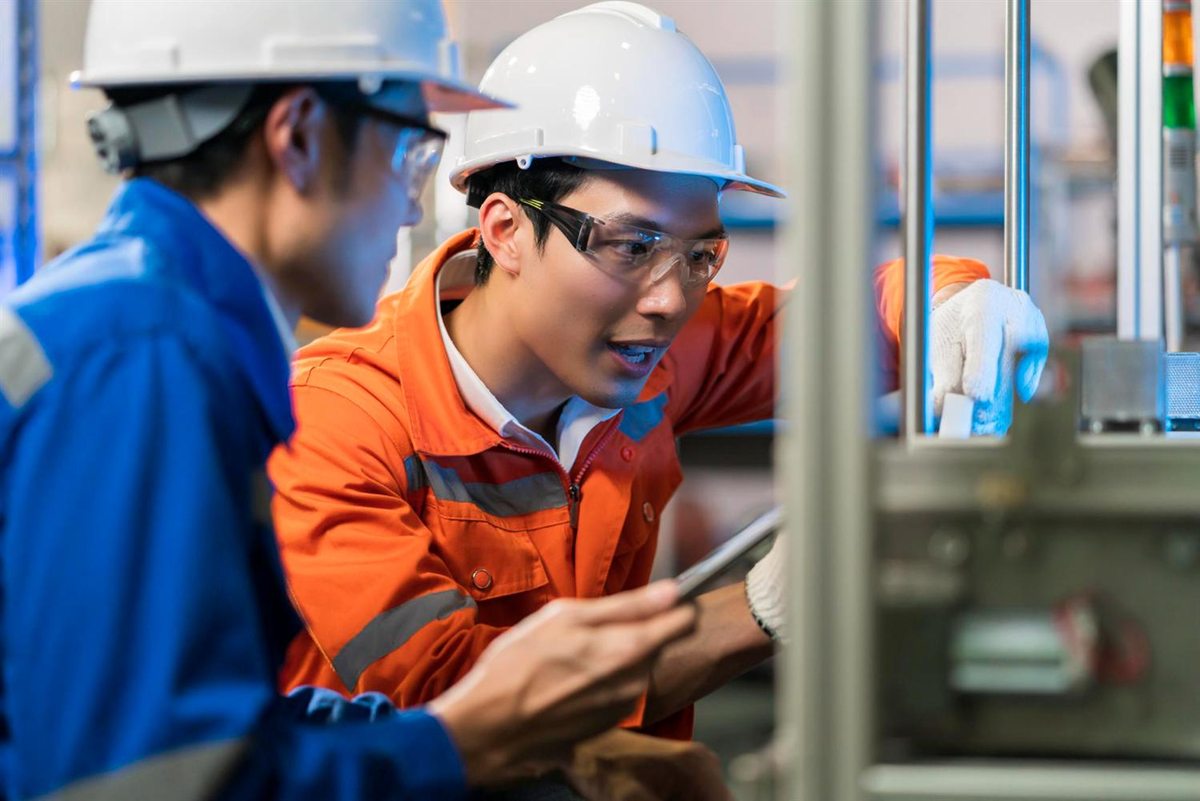
Machine vision sensors help a factory system detect, capture, and respond to visual information. In a simple setup, a sensor may confirm that a product has arrived before a camera takes an image. In a more advanced setup, cameras, sensors, lighting, software, and machinery work together to inspect or guide production.
For businesses comparing a machine vision system, sensors are worth understanding because timing matters. If the camera captures too early, too late, or from the wrong position, the image may not be useful. Sensors help coordinate the system so inspection happens consistently.
What sensors can support
Sensors may be used to detect product presence, trigger image capture, count items, confirm position, or support sorting. In some cases, a smart vision sensor can perform simple checks on its own. In other cases, the sensor is part of a larger system with separate cameras and software.
A common example is a conveyor line. When a product reaches a set point, a sensor triggers the camera. The software checks the image, then the line may continue, stop, reject the product, or record the result. This timing helps the inspection stay repeatable even when many products pass through the line.
Simple sensors and full vision systems
A simple sensor may be enough when the task is basic, such as checking whether an object is present. A full vision system may be needed when the task involves measuring dimensions, reading printed information, checking orientation, identifying defects, or comparing multiple visual features.
The decision depends on inspection complexity. Manufacturers should avoid overbuilding a system for a simple task, but they should also avoid using a basic sensor when the requirement needs detailed image analysis. A practical comparison starts with the problem, not the equipment name.
Reliability in daily production
Factory environments can be challenging. Dust, vibration, product variation, changing light, and high speed can affect sensor performance. A good setup should be tested under normal working conditions, not only in a clean demonstration. Maintenance access and operator understanding also matter.
Sensor placement is another practical point. A sensor that is too close, too far, or poorly protected may give unstable results. The setup should account for product movement, conveyor spacing, and the way operators load or unload items. If products arrive at uneven angles, the system may need guides or fixtures before the camera can inspect properly.
It is also useful to decide what should happen when a sensor or camera trigger fails. Some lines may stop automatically, while others may alert an operator. A clear response helps avoid missed inspections and makes troubleshooting easier.
When comparing sensor choices, manufacturers should think about response speed, mounting position, detection distance, durability, and how easily the sensor can be adjusted. A sensor that works well during setup but is hard to reach later may slow down maintenance. Clear mounting and simple access can save time when production teams need to clean, check, or replace parts.
Sensor planning connects closely with camera and lighting setup. The sensor helps capture the right moment, while the camera and lighting help make the image useful. When these parts work together, inspection results become easier to trust.
For Malaysian manufacturers, the most useful sensor setup is one that fits the line, supports the inspection goal, and gives operators clear information. The technology should make the process easier to control, not harder to understand.