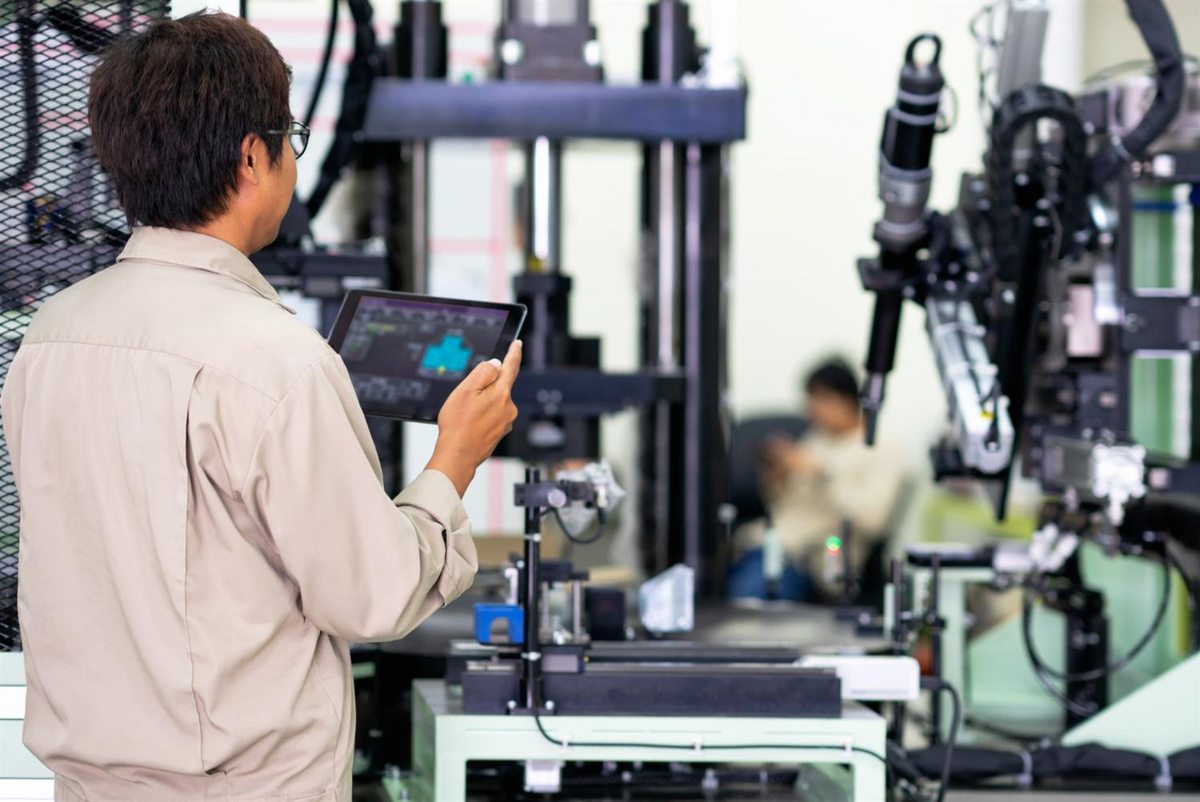
A machine vision system uses cameras, lighting, sensors, image processing, and software to help machines understand visual information. In a factory, this can mean checking whether a product is present, measuring a part, reading a code, confirming alignment, guiding a robot, or detecting visible defects before the item moves further down the line.
For Malaysian manufacturers, machine vision is useful because many production tasks are repeated at high speed. A person may be able to inspect products by eye, but repeated visual checking can become tiring and inconsistent. Machine vision helps create a more stable inspection process, especially when defects are small, line speed is high, or measurements need to be recorded.
How a machine vision system works
The basic process starts with image capture. A camera takes a picture of the product or part. Lighting helps make important details clear, while sensors can trigger the camera at the right moment. Software then analyzes the image based on rules, measurements, patterns, or trained models. The system may decide whether an item passes, fails, needs sorting, or requires another action.
Machine vision is not only about inspection. It can also support robot guidance, positioning, counting, identification, and process control. For example, a system may help a robot pick up a part correctly, check whether a label is placed straight, or confirm whether a component is present on an assembly.
Machine vision and automated inspection
Machine vision is the broader technology. Automated vision inspection is one common use of it. In simple terms, machine vision gives equipment the ability to see, while inspection uses that visual ability to check quality. Many factories use both terms together because the same cameras and software may support several tasks.
The best way to compare options is to focus on the production need. A packaging line may need label, barcode, closure, and fill-level checks. An electronics line may need component presence and alignment checks. A metal or plastic part may need measurement or surface inspection. Each use case can require different cameras, lenses, lighting, and handling design.
What businesses should compare
Before choosing a system, manufacturers should define the product, defect type, line speed, tolerance, lighting condition, and required output. It is also helpful to test real samples, including good products, rejected products, and borderline cases. This shows whether the system can perform in normal factory conditions.
It is also worth comparing how the system will be used after installation. Some factories need only a pass-fail signal. Others need image records, defect counts, production reports, or connection with existing automation equipment. A system that is accurate but difficult for operators to understand may create new problems. Clear screens, simple alarms, and practical training can make the technology easier to use every day.
Maintenance should be part of the discussion too. Cameras may need cleaning, lighting may need adjustment, and product changes may require new inspection settings. A well-planned system should make these tasks manageable instead of depending on guesswork.
Companies comparing a machine vision system can review how camera setup, inspection rules, software, and automation integration work together. Cortex Robotics is a Malaysia-based automation and advanced inspection solutions provider serving sectors such as electronics, semiconductor, medical, automotive, plastics, metalworks, gloves, and hard disk drive manufacturing.
A good machine vision project starts with a clear problem, not with the most complex equipment. When the inspection goal is specific and the system is tested with real production samples, machine vision can help improve consistency, reduce repeated manual checking, and give teams better information for quality decisions.