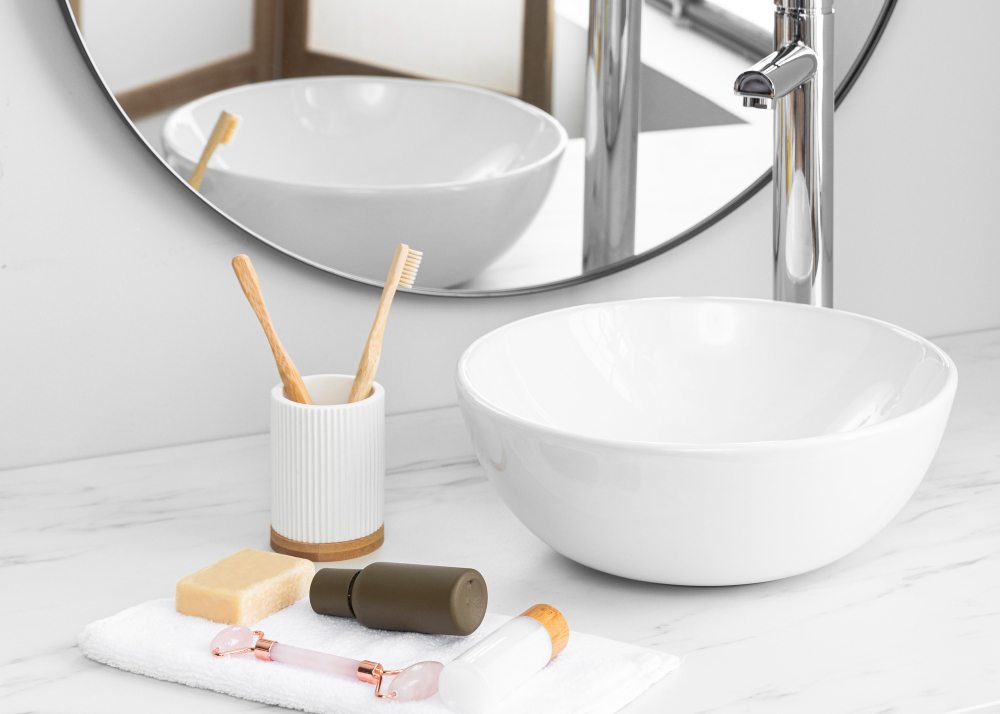
Countertop and wall-hung basins are two common choices in modern bathroom design. Both can look clean and stylish, but they suit different spaces and habits. The better option depends on the bathroom size, storage needs, tap position, cleaning preference, and the look the buyer wants to create.
A countertop basin sits on top of a vanity or counter. It is often used as a design feature because the bowl shape is visible. A wall-hung basin is fixed to the wall without needing a full vanity below. It can make a small bathroom feel more open and is often chosen when floor space is limited.
Style and appearance
Countertop basins usually make a stronger visual statement. They are available in many shapes, including round, oval, rectangular, square, and more sculptural designs. They can work well in bathrooms where the vanity is meant to be a focal point.
Wall-hung basins can feel lighter and simpler. They are often used in compact bathrooms, powder rooms, or commercial washrooms where the design needs to be neat without taking up too much space. Some wall-hung models are minimal, while others have a more premium shape.
Space and storage
The biggest advantage of a countertop basin is that it normally sits on a vanity, which can provide storage below. This is useful for toiletries, cleaning supplies, towels, and daily bathroom items. In a family bathroom, storage can make the room easier to keep tidy.
A wall-hung basin saves floor space but may not provide storage. This can be fine in a guest bathroom or small washroom, but it may be less convenient in a main bathroom. Buyers who choose wall-hung basins may want a mirror cabinet, wall shelf, or separate storage unit.
Cleaning and maintenance
Both styles can be easy to clean when installed well. Countertop basins require attention around the base, where water can collect if the counter is not wiped regularly. The counter material should also be suitable for moisture.
Wall-hung basins leave the floor open, which makes floor cleaning easier. However, exposed plumbing may need to be considered. Some buyers prefer designs that hide or tidy the pipework for a cleaner appearance.
Installation considerations
Countertop basins need a suitable counter height, correct waste outlet position, and a tap that reaches the bowl comfortably. A basin that is too tall can feel awkward, especially for children or shorter users. Wall-hung basins need strong wall support and accurate plumbing placement.
The surrounding wall and vanity material should also be considered. A heavy countertop basin needs stable support, while a wall-hung basin should be fixed to a wall that can safely carry the load. In some renovations, extra backing or reinforcement may be needed before installation.
Before deciding, it helps to check the actual bathroom measurements and the position of existing water points. Changing plumbing may be possible, but it can add cost and time to the renovation.
Which one should you choose?
Choose a countertop basin if you want a stronger design feature and useful vanity storage. Choose a wall-hung basin if the bathroom is small, simple, or needs a lighter layout. For rental properties or busy shared bathrooms, ease of cleaning and durability may matter more than visual impact.
For a showroom-style bathroom, countertop designs often give more room for visual expression. For a practical washroom where speed and simplicity matter, wall-hung designs may feel cleaner and less bulky.
Room planning also depends on measurement and finish. Before choosing between these two styles, compare basin size with your available counter or wall space, then review basin materials and finishes for daily maintenance.
If you are still comparing styles, this overview of basins in Malaysia explains how basin type, size, material, and finish work together when planning a bathroom.
There is no single best basin for every space. A good choice is one that fits the room, feels comfortable to use, and supports the way the bathroom is cleaned and organized every day.